Understanding Home Mobility Exercises
An educational resource exploring gentle movements and stretches that may support joint range of motion and daily flexibility. This site provides informational content about home-based exercises suitable for various ages and fitness levels.
Educational content only. No medical services. No promises of outcomes.
Learn More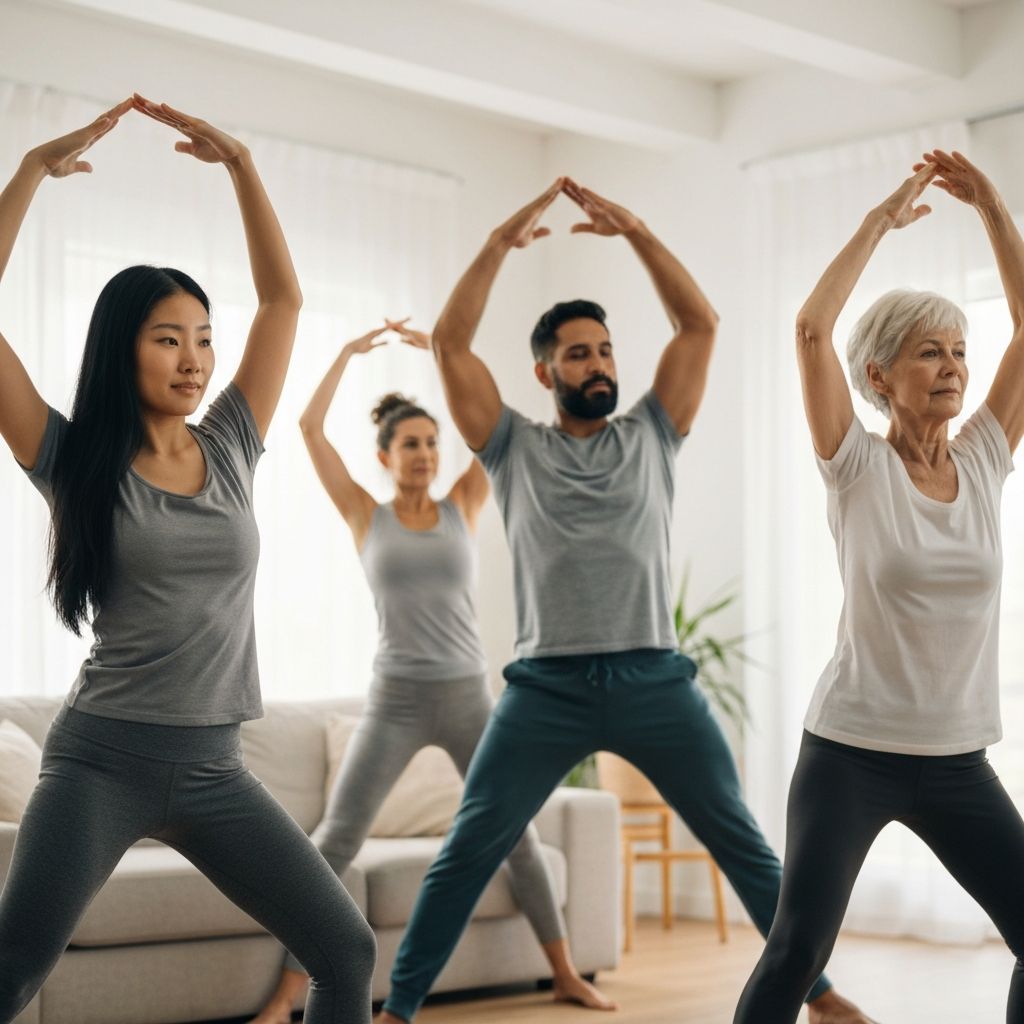
Introduction to Joint Range of Motion
Joint range of motion refers to the extent of movement available at a joint. Understanding how joints move can help individuals appreciate the role of regular, gentle movement in daily life.
This section explores general concepts about joint mobility, including how various factors may influence the way we move. The information presented is educational in nature and describes common movement patterns observed in everyday activities.
Different joints in the body have varying ranges of motion based on their structure. Ball-and-socket joints, such as those in the shoulders and hips, typically allow movement in multiple directions. Hinge joints, like those in the elbows and knees, primarily permit movement in one plane.
Explore Movements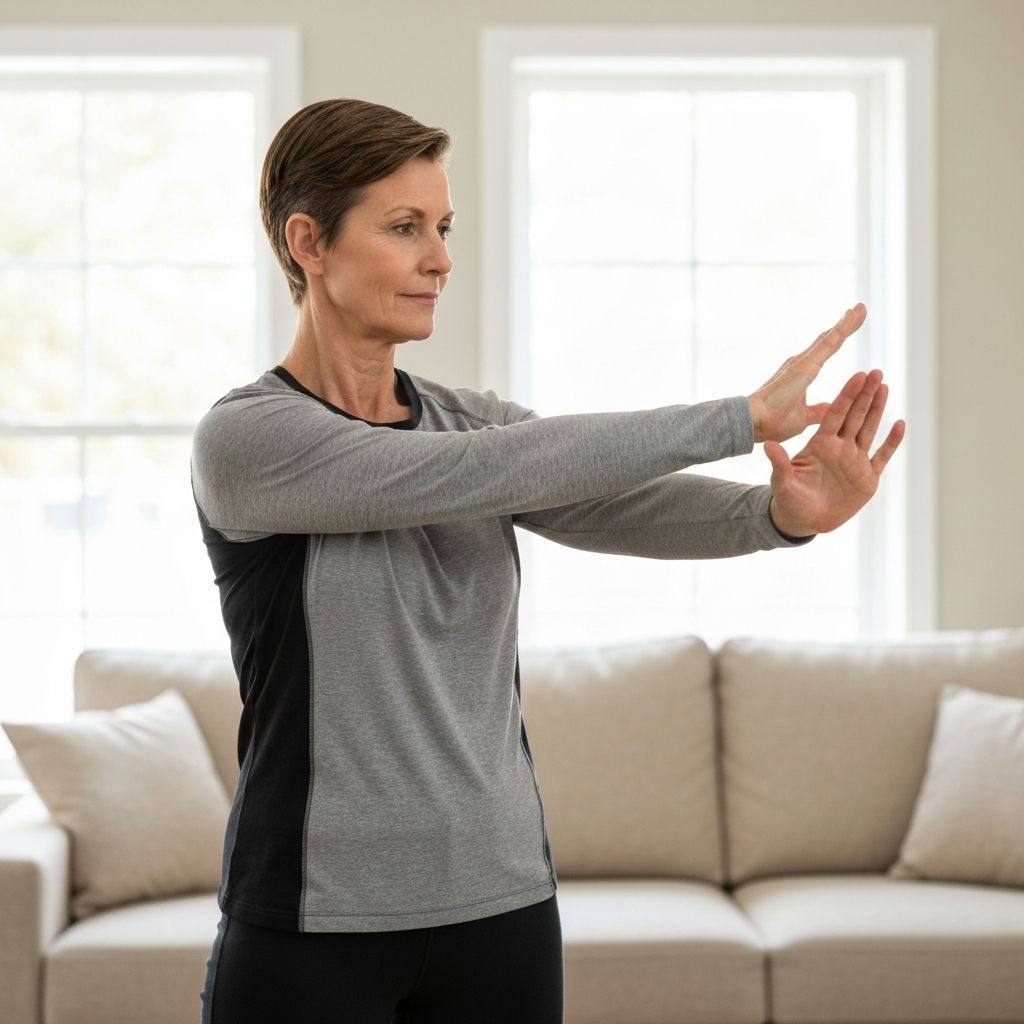
General Information About Daily Motion
Movement Variety
Regular movement throughout the day involves using different muscle groups and joints. Many people incorporate various types of motion into their daily routines, from walking to reaching for objects.
Flexibility Concepts
Flexibility refers to the ability of muscles and connective tissues to lengthen. Different activities may involve different degrees of flexibility, and individuals naturally vary in their flexibility levels.
Daily Comfort
How we move throughout the day can influence our overall sense of physical comfort. Understanding basic movement patterns is part of general wellness education.
Information Context
The content on this page is educational and informational. It does not constitute individual recommendations. Movement practices vary widely, and what works for one person may differ for another. This information is not intended to replace personal decision-making or professional guidance.
Gentle Stretching for Flexibility
Stretching is a common practice that many people incorporate into their daily routines. Below are descriptions of some general stretching concepts and movements.
Seated Stretches
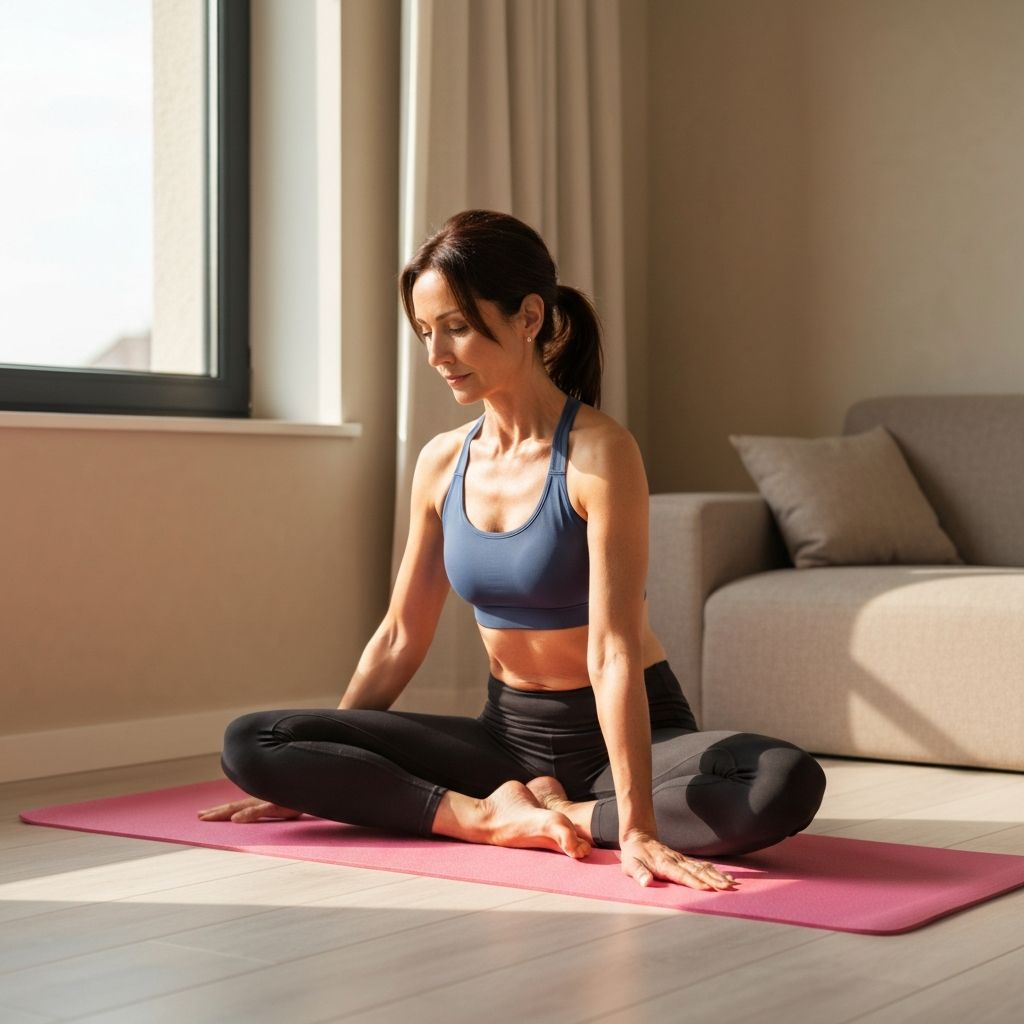
Seated stretches can be performed while sitting on a chair or on the floor. These movements typically involve extending the legs or reaching toward the feet while maintaining a comfortable position.
Read More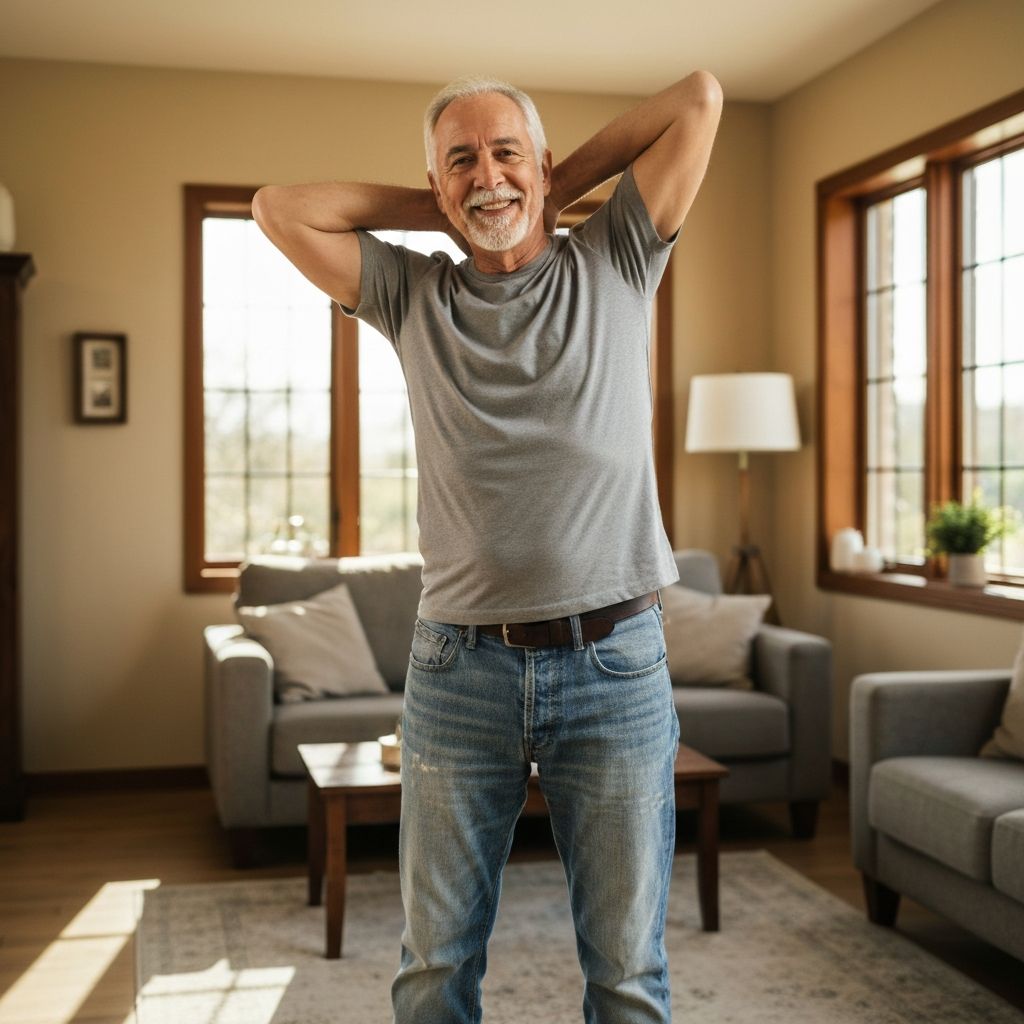
Neck and Shoulder Movements
Gentle neck rotations and shoulder rolls are movements that many people perform throughout the day. These can be done while standing or sitting in various settings.
Read More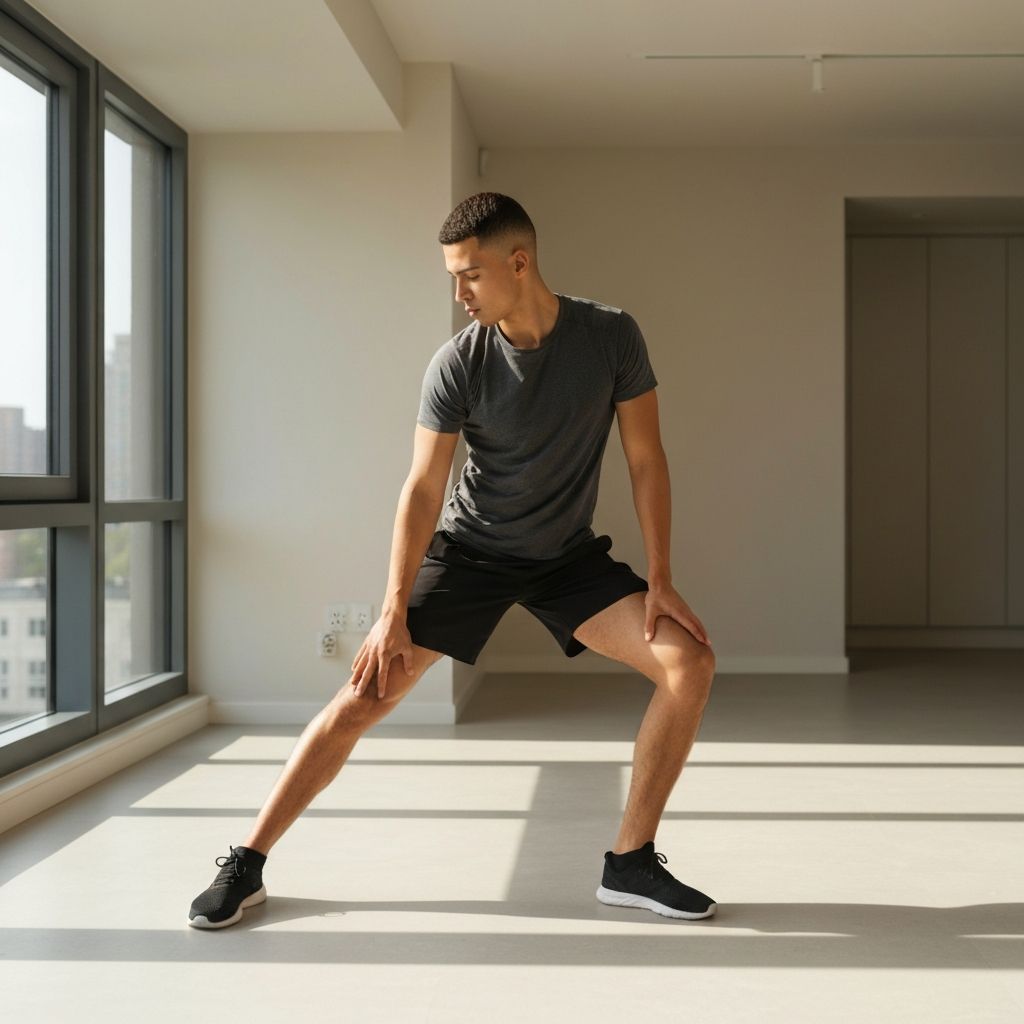
Lower Body Stretches
Stretches involving the hips, legs, and lower back are common in many movement practices. These movements vary in intensity and can be adapted to individual comfort levels.
Read More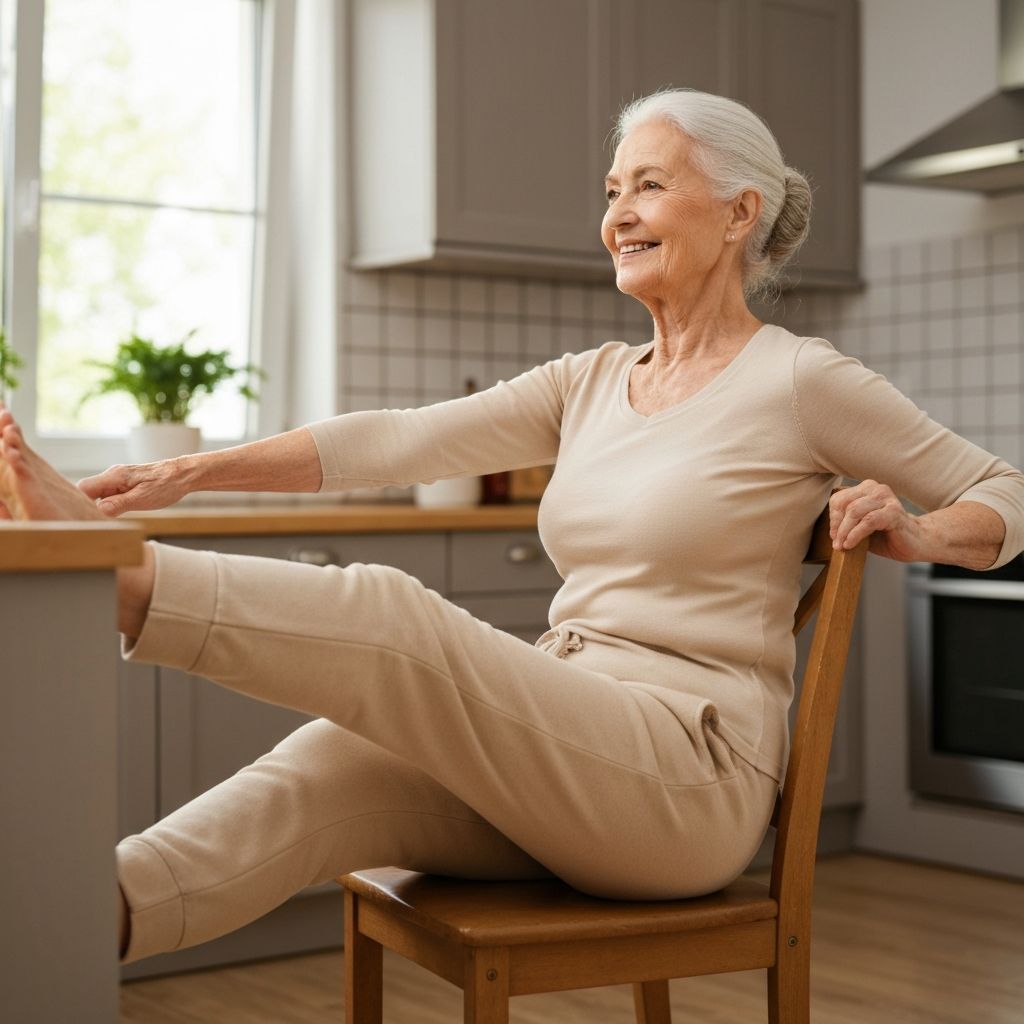
Chair-Assisted Movements
Using a chair for support is a common approach to performing various movements. Chairs can provide stability while allowing for a range of seated or standing exercises.
Many people find chair-assisted movements accessible, as they can be performed in home or office environments. These movements may include seated leg lifts, supported standing stretches, or gentle torso rotations while seated.
The key aspects of chair-assisted movements typically involve:
- Using a stable, non-rolling chair
- Maintaining proper posture while seated
- Moving within comfortable ranges
- Breathing naturally throughout movements
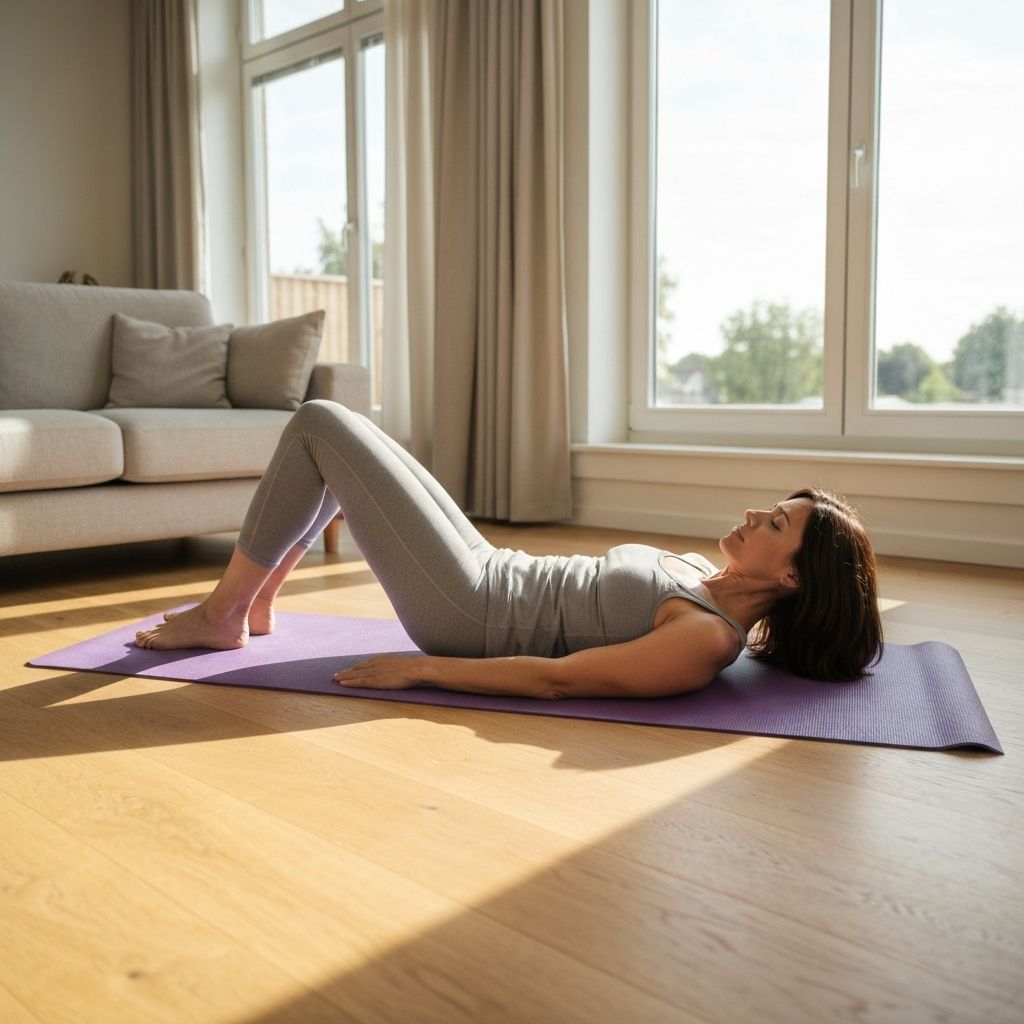
Floor-Based Range Exercises
Exercises performed on the floor are a fundamental part of many movement practices. Using the floor provides a stable surface that can support various positions and movements.
Floor exercises may involve lying on the back, stomach, or side, as well as positions on hands and knees. These positions allow for different types of stretching and strengthening movements.
Common floor-based movements include:
- Supine stretches (lying on the back)
- Prone movements (lying face down)
- Side-lying exercises
- Quadruped positions (hands and knees)
Balance and Stability Concepts
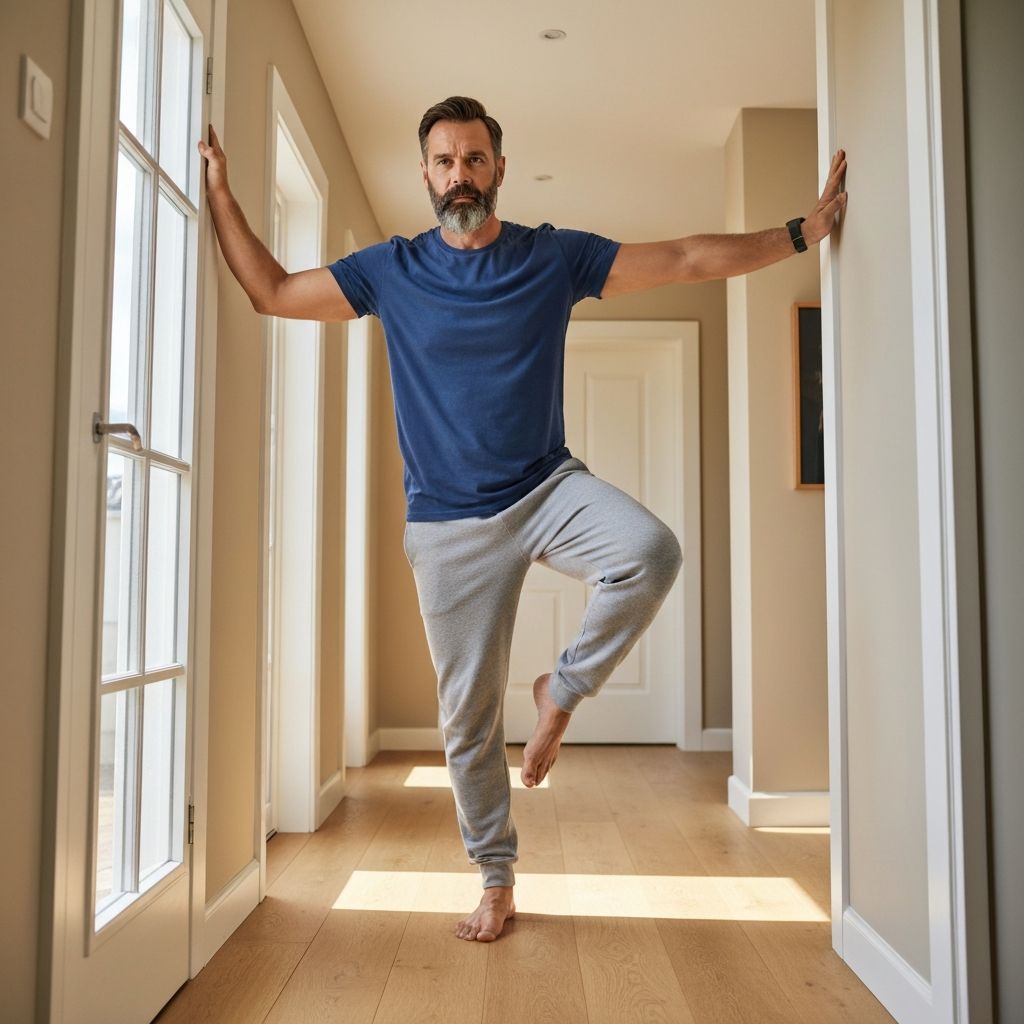
Balance involves the ability to maintain the body's center of mass over its base of support. This is a complex process that integrates information from multiple body systems.
Stability exercises are movements designed to challenge and engage the systems involved in balance. These exercises range from simple standing positions to more complex single-leg movements.
General principles often discussed in balance education include:
- Starting with support nearby for safety
- Progressing gradually from easier to more challenging positions
- Focusing on controlled movements
- Being aware of the surrounding environment
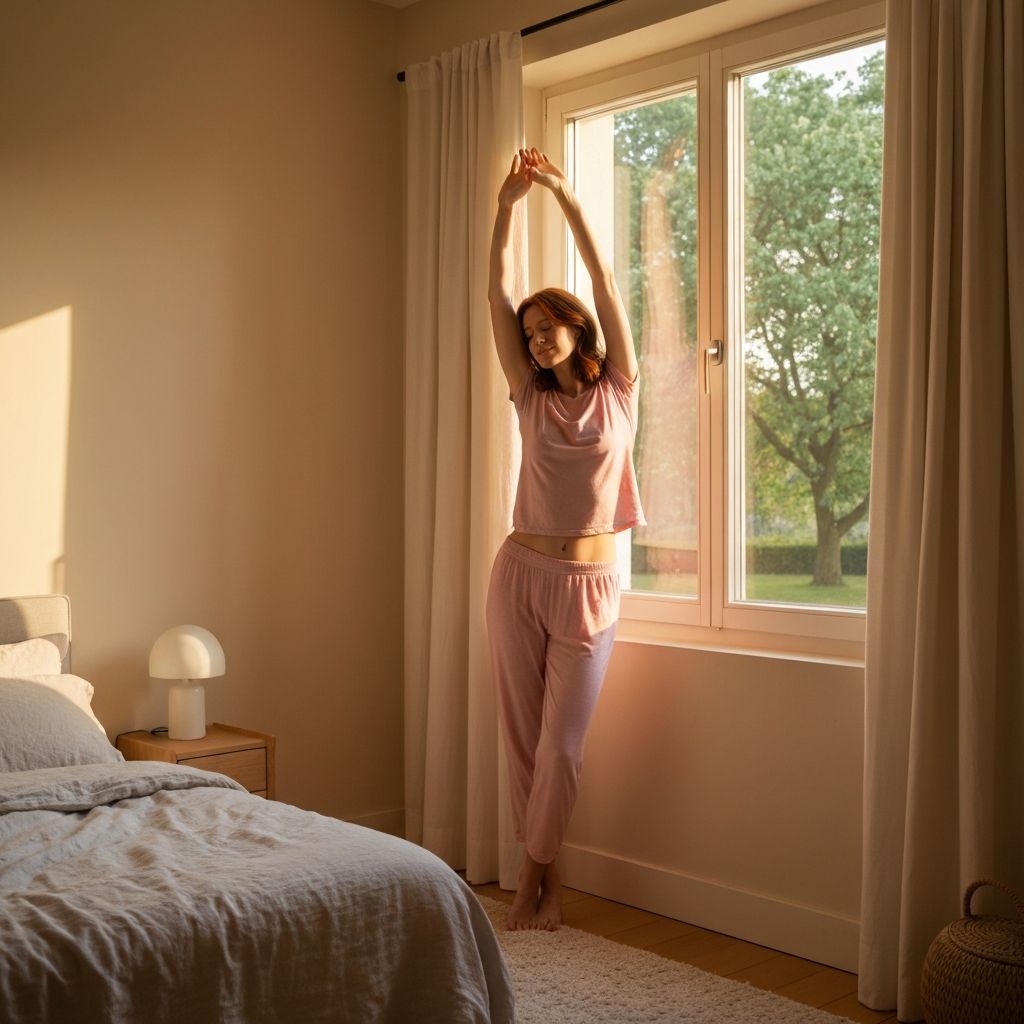
Morning and Evening Mobility Ideas
Many people incorporate movement into their morning or evening routines. The timing of movement practices is a personal choice that may depend on individual schedules and preferences.
Morning movements are sometimes described as a way to transition from rest to activity. Evening movements may be approached as a way to wind down after a day's activities.
Common themes in discussions about daily movement routines include:
- Consistency in timing and practice
- Adapting movements to how one feels on a given day
- Creating a comfortable environment for movement
- Listening to one's body during practice
Limitations and Context
This content provides general educational information about movement concepts. It does not offer individual recommendations or replace personal judgment. Approaches to daily movement vary widely among individuals, and the information here represents general descriptions rather than specific guidance.
Frequently Asked Questions
Joint range of motion refers to the distance and direction a joint can move. This varies based on joint type, individual anatomy, and other factors. Range of motion is often discussed in educational contexts related to movement and physical activity.
Home mobility exercises are movements that can be performed in a home environment without specialized equipment. These may include stretches, balance exercises, and gentle movements designed to engage various joints and muscle groups.
Flexibility is influenced by many factors, including genetics, age, activity levels, and individual anatomy. Because of this natural variation, flexibility levels differ significantly from person to person.
Many home exercises can be performed without equipment. Some people use items commonly found at home, such as chairs for support, towels for stretching assistance, or mats for floor exercises.
Mobility and flexibility exercises typically focus on controlled movements through joint ranges of motion. This differs from cardiovascular activities, which emphasize sustained elevated heart rate, or strength training, which focuses on resistance-based muscle engagement.
Continue Learning About Movement
This educational resource provides information about home mobility exercises and flexibility concepts. Explore additional content to learn more about these topics.
Learn More About Us Explore ResourcesContact Information
If you have questions about the educational content on this site, you may reach us using the information below.
MotionEase
Václavské náměstí 24
Prague, Czechia
Phone: +420 732 849 216
Email: [email protected]
Send a Message
Additional Resources
For those interested in learning more about mobility and flexibility concepts, various educational resources are available. These may include books, online articles, and educational materials from fitness organizations.
When exploring additional resources, consider:
- The source and credibility of information
- Whether content is educational or promotional
- The date of publication for current information
- Multiple perspectives on movement practices
Last updated: January 2026